
Is Invisalign Better Than Braces for Straightening Teeth?
When it comes to straightening teeth, many wonder if Invisalign is the better choice over traditional braces. Whether you’re dealing with misalignment, crooked teeth, or other dental imperfections, choosing the right treatment is crucial for both your smile and comfort. The options are clear: traditional braces or Invisalign?
Each offers distinct advantages depending on your needs. In this blog, we’ll compare both treatments to help you decide which is better for you, considering factors like comfort, aesthetics, treatment time, and lifestyle.
As you consider your options, think about what matters most to you: comfort, appearance, treatment duration, or convenience. By weighing these factors, you can make an informed choice and work with your orthodontist to achieve your ideal smile.
What Are Braces?
Traditional metal braces have been the go-to method for straightening teeth for decades. These braces use brackets, wires, and rubber bands to apply continuous pressure to your teeth, gradually shifting them into the correct position.
The key components of braces include:
- Brackets: These small metal or ceramic pieces are bonded to the front of your teeth. They serve as anchors for the wires.
- Wire: The wire connects the brackets and applies the pressure necessary to move your teeth.
- Rubber bands (elastics): These are used to correct specific dental issues like bite misalignments and provide additional pressure to adjust teeth.
The treatment process begins with an initial consultation, where an orthodontist will assess your teeth and create a treatment plan tailored to your specific needs. The braces are adjusted periodically (usually every 4-6 weeks) to ensure progress is being made. Typically, treatment with braces lasts anywhere from 18 months to 3 years, depending on the severity of the alignment issue.
Best Candidates for Braces:
Braces are ideal for individuals with more complex dental issues, such as severe crowding, crooked teeth, underbites, or overbites. They are also highly effective for patients who need precise adjustments that cannot be fully addressed with aligners like Invisalign.
What is Invisalign?
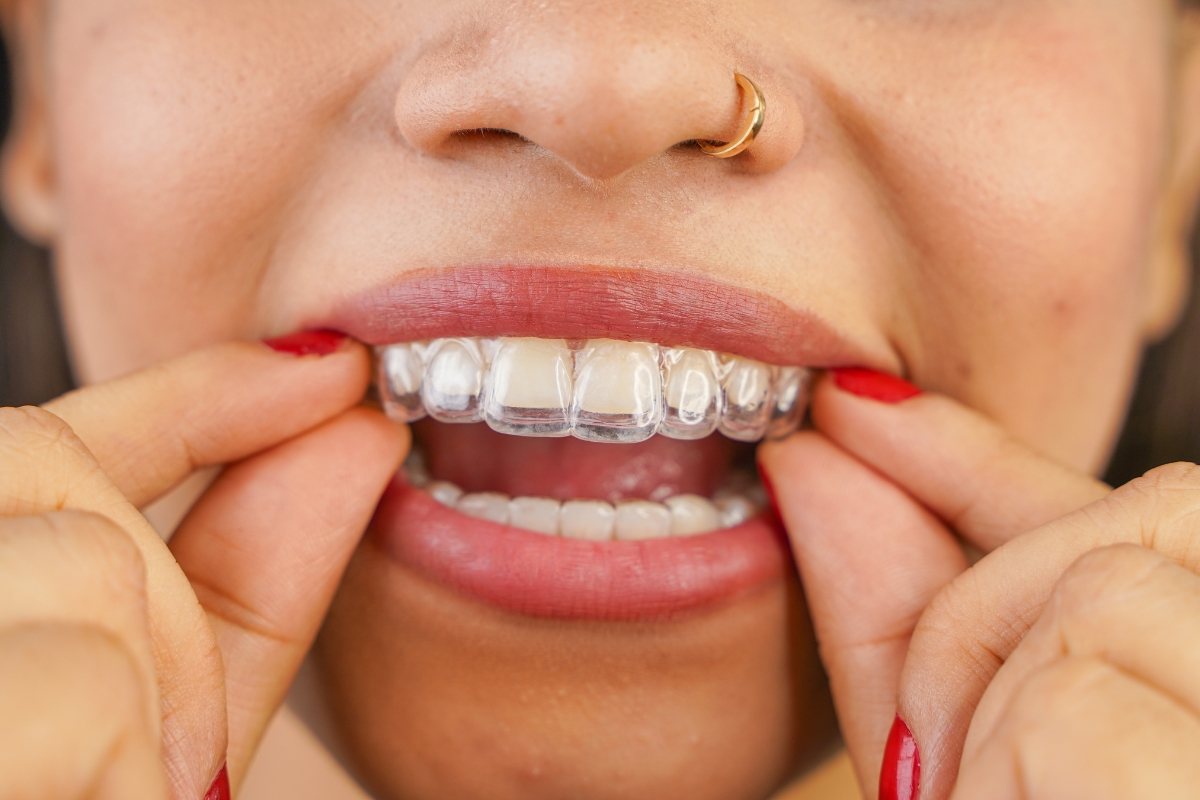
Invisalign is a modern orthodontic solution that uses clear, custom-made aligners to gradually straighten your teeth. Unlike traditional braces, Invisalign in St Louis are virtually invisible, making them a popular choice for adults and teens who want a more discreet treatment option.
How it Works:
The Invisalign system begins with a detailed scan or impression of your teeth, which is used to create a set of clear aligners that are uniquely designed to fit your mouth. Each aligner is worn for about 20-22 hours a day, removing it only to eat, drink, brush, or floss.
Every few weeks, you’ll switch to a new set of aligners as your teeth gradually shift into place. The clear plastic aligners are smooth and comfortable, offering a more pleasant experience compared to metal braces.
Best Candidates for Invisalign:
Invisalign is most effective for individuals with mild to moderate alignment issues, such as slight crowding, gaps, or minor bite problems. It’s also a good option for those who want to avoid the appearance of metal braces and are committed to maintaining their aligners.
Key Differences Between Braces and Invisalign
When comparing braces and Invisalign, there are several key differences to consider:
Aesthetic Appeal:
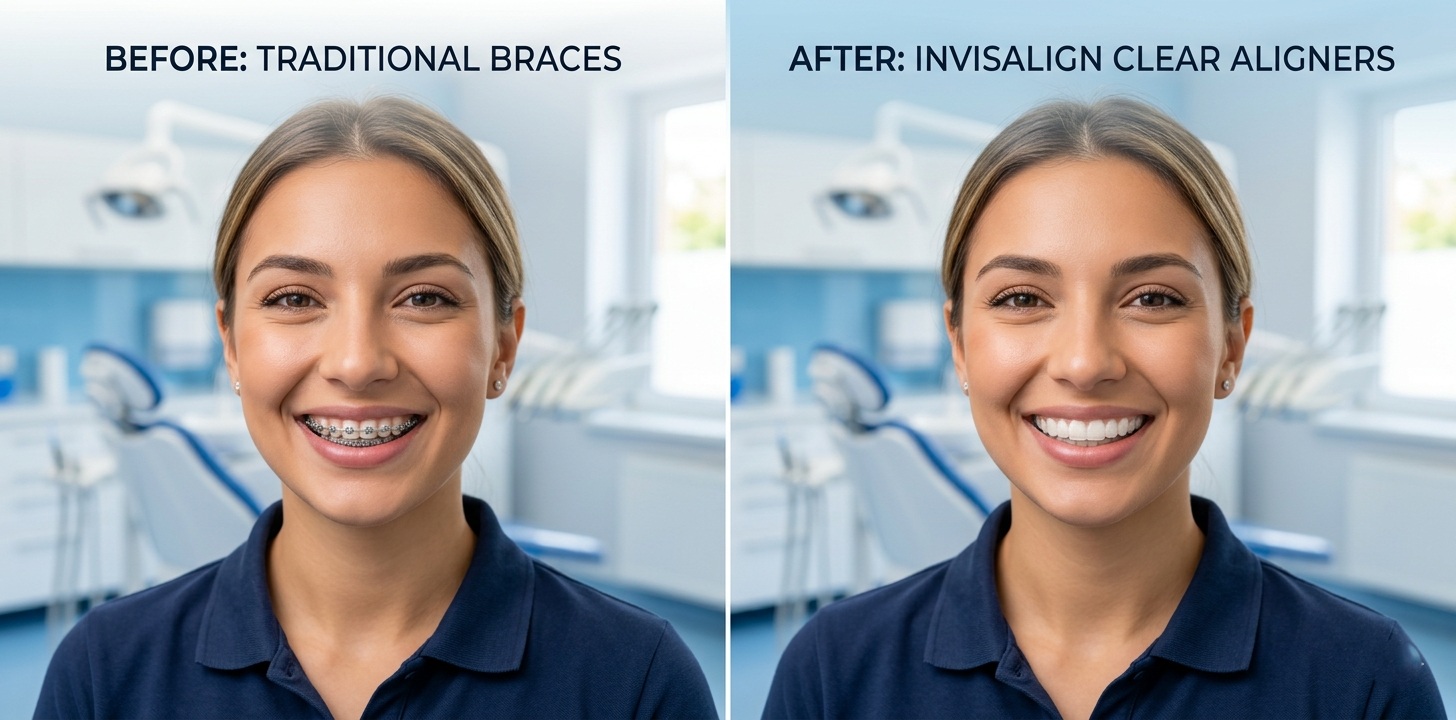
One of the most noticeable differences is how each option looks. Braces are visible, while Invisalign aligners are made of clear plastic, making them nearly invisible to others. This makes Invisalign a more aesthetically pleasing option, especially for adults who may feel self-conscious about wearing metal braces.
Comfort:
Braces can sometimes cause irritation to the inside of your mouth, especially after adjustments. The metal brackets and wires can rub against the cheeks and gums. Invisalign, on the other hand, is made from smooth plastic and is generally more comfortable. However, Invisalign may require some initial discomfort as your teeth shift into place.
Treatment Duration:
Braces tend to take longer to work. Depending on the severity of the alignment issue, treatment can last between 18 months and 3 years. Invisalign treatment usually takes 12 to 18 months, depending on the complexity of the case. However, compliance is key with Invisalign since you need to wear the aligners for the prescribed amount of time each day.
Maintenance and Convenience:
Braces require frequent visits for adjustments, and food can get stuck in the brackets and wires. You may also need to be careful about the foods you eat, avoiding hard, sticky, or chewy foods that could damage the braces. Invisalign is much more convenient since the aligners are removable. This allows you to eat and drink whatever you want and brush your teeth as normal, without worrying about food particles getting stuck in your braces.
Cost:
The cost of both treatments can vary based on the severity of the dental issue and the region. Braces typically cost between $3,000 and $7,000, while Invisalign usually ranges from $3,500 to $8,000. However, Invisalign may be more expensive depending on the complexity of your case.
Advantages of Invisalign Over Braces
Invisalign offers several advantages that make it an appealing choice for many patients:
Aesthetic Considerations:
The nearly invisible nature of Invisalign aligners means you can straighten your teeth without anyone noticing, making it an excellent choice for individuals who are concerned about their appearance during treatment.
Comfort:
Since Invisalign aligners are made from smooth plastic, they are far more comfortable than traditional braces. Moreover, Invisalign in in St Louis won’t irritate your gums or cheeks, and there are no metal components to cause discomfort.
Lifestyle Flexibility:
Invisalign aligners are removable, so you can enjoy your favorite foods and beverages without restrictions. Oral hygiene is also much easier since you can remove the aligners to brush and floss your teeth, reducing the risk of cavities and gum disease during treatment.
When Braces May Be the Better Option
While Invisalign is a great option for many, braces may be the better choice for certain situations:
Severe Cases:
Braces are more effective for patients with severe dental issues, such as complex bite problems or extreme crowding. In these cases, traditional braces offer more precise control over tooth movement.
Cost Considerations:
Braces are often more affordable than Invisalign, particularly for patients who don’t have complex alignment issues but still need significant treatment. Additionally, some insurance plans may cover traditional braces more easily than Invisalign.
Durability:
Braces are a durable solution that works well for younger patients who are still growing. Since braces are fixed, there is less risk of them being misplaced or not worn as prescribed.

How to Decide Which Option is Right for You
When deciding between Invisalign and braces, there are several factors to consider:
- Personal Preferences: Do you prefer a more discreet treatment option, or are you okay with the visibility of braces?
- Lifestyle: If you have a busy lifestyle and want the flexibility to eat and drink normally, Invisalign may be the better choice.
- Budget: Consider your financial situation and check with your orthodontist to see which option fits your budget.
- Severity of the Issue: If you have severe dental alignment issues, braces may be necessary to achieve the best results.
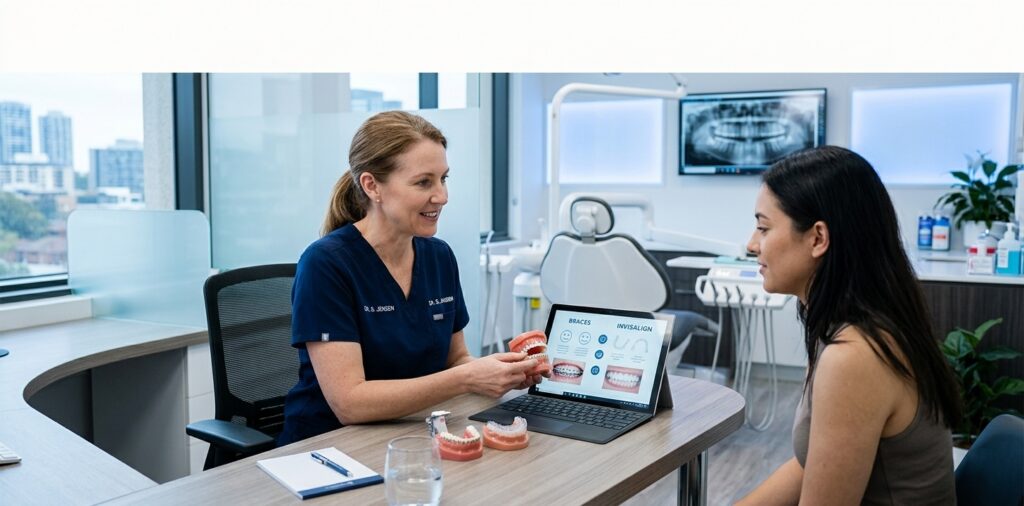
To get an accurate recommendation tailored to your unique needs, it’s best to consult with an orthodontist at Crestwood Dental Group. They’ll help you decide on the treatment that will provide the best results.
Invisalign and braces each have their pros and cons, and the best choice for you depends on your personal preferences, lifestyle, and the severity of your dental issues. While Invisalign offers a more discreet, comfortable, and flexible option, braces may be the right solution for more complex cases. At Crestwood Dental Group, we offer both treatments and can help guide you through your options to ensure the best outcome for your smile.
Are you ready to begin your journey toward a straighter, more confident smile? Schedule a consultation with us today to discuss Invisalign or braces and get personalized recommendations based on your unique needs.
People Also Ask
How long does Invisalign treatment take?
Invisalign treatment typically takes 12 to 18 months, depending on the complexity of your case.
Can I eat normally with Invisalign?
Yes, Invisalign aligners are removable, so you can eat and drink without restrictions.
Will Invisalign impact my speech?
Most people experience slight speech changes when first wearing Invisalign, but it typically improves within a few days.
How often do I need to change my Invisalign aligners?
You typically change your Invisalign aligners every 1-2 weeks, depending on your treatment plan.
Are there any age restrictions for Invisalign?
Invisalign can be used by both teenagers and adults, provided they have enough dental maturity and commitment to wearing the aligners.